
Why Strength Alone Isn’t Enough
Strength is essential for joint stability and injury prevention, but on its own, it doesn’t go far. Without endurance, muscles fatigue quickly and leave joints unprotected.
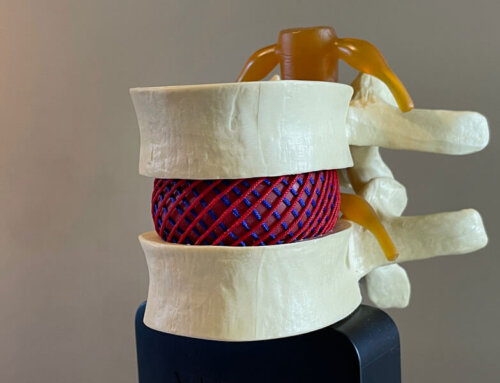
Take the core muscles as an example. When strong, they maintain the natural curve of the lower back during lifting, shielding discs and facet joints. But if endurance is lacking, they tire within a few repetitions. The curve collapses, and the risk of injury rises.
Q. How Do We Build Endurance?
Endurance is gained through repetition and sustained effort.
- Strength & muscle mass: heavy loads + few repetitions.
- Endurance: moderate loads + many repetitions, or maintaining effort for longer.
Where Else Do We Need Both?
Beyond the lower back, strength and endurance protect multiple joints:
- Arms and hands: safeguard elbow and wrist.
- Shoulder stabilizers (scapula + rotator cuff): prevent shoulder injuries.
- Legs and feet: support knee and ankle — especially useful when walking on uneven ground.
- Pelvic muscles: provide hip stability.
The Caveat: Repetition Can Harm Too
While repetition builds endurance, poorly executed repetition damages joints. Pushing to end ranges of motion repeatedly can overstretch ligaments or trigger osteoarthritis — especially in naturally flexible bodies.
Example: Sun Salutations.
- Deep backbends without core stability make facet joints rub together. Repetition leads to inflammation, osteophyte formation (irregular bone growth), and restricted movement.
- In forward bends, forcing the femoral neck into the acetabulum can cause similar degeneration in the hips.
Building Strength + Endurance Safely
The key is controlled, repeated movements, with stability and alignment intact. Below are exercises to target key areas.
Shoulder Blades, Shoulders, and Arms
Trigger points (painful muscle knots) often develop where muscles are under constant tension. If we build more muscle mass, tension distributes across a larger volume, and trigger points are less likely to form. Endurance training helps those dysfunctional fibers finally relax.
Push-ups with knees bent
- Hands firm on the floor. Turn them at 45° towards each other to protect wrists (not shown in the photo).
- Keep pelvis and lower back in the same relative position (so don’t bend from the lower back).
- Inhale bend the elbows, exhale to extend. 15 times.
- When your arms tire, make the movement smaller, but try to complete the 15 reps.
- Finish in Child’s Pose.
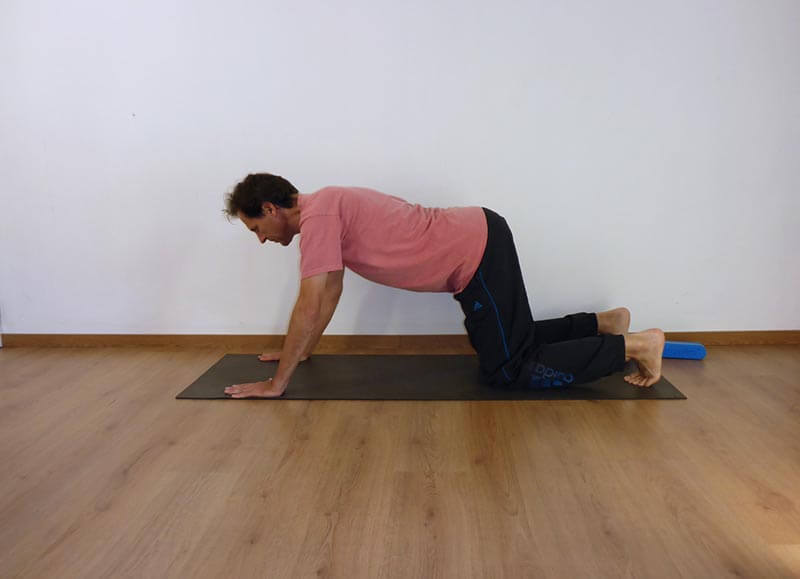
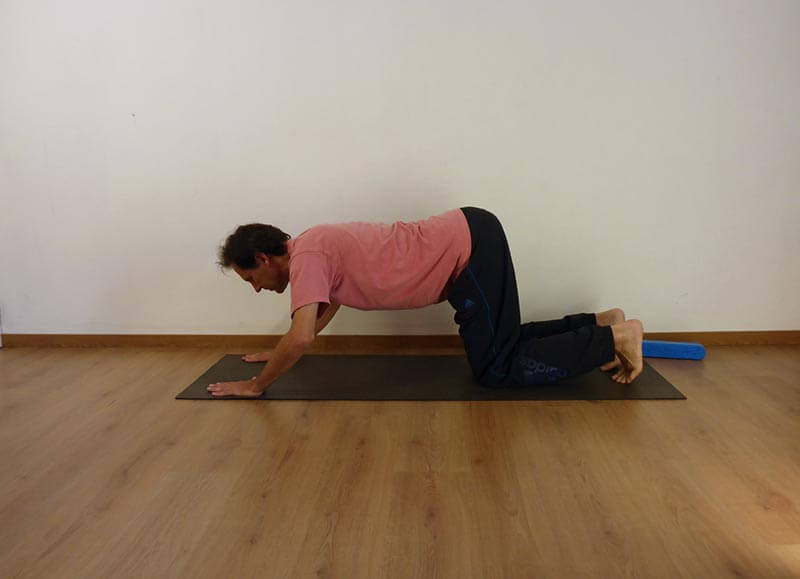
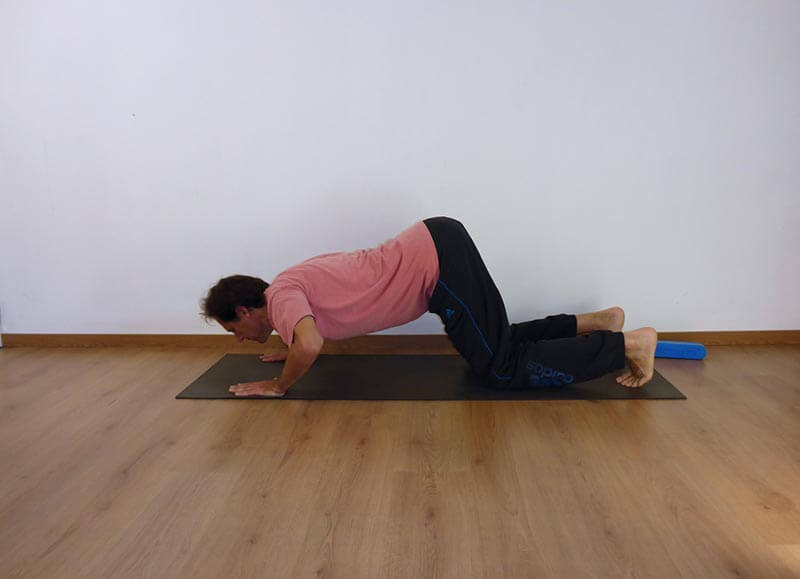
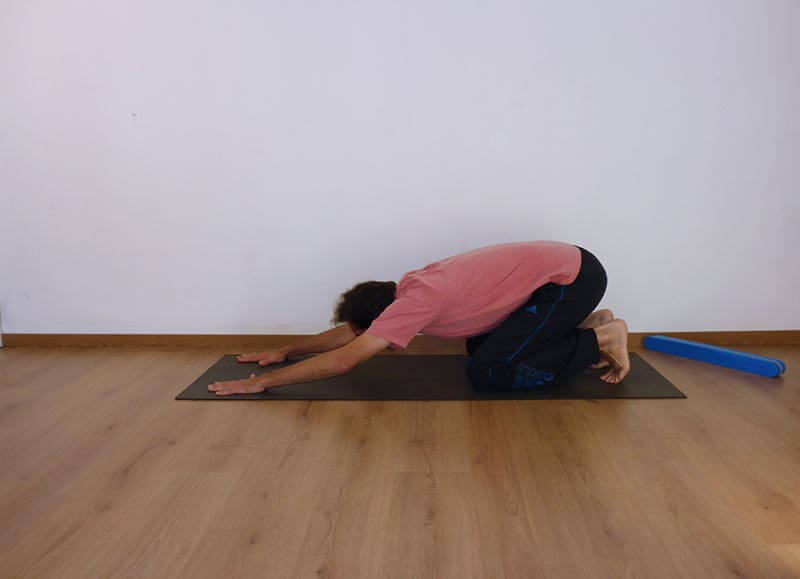
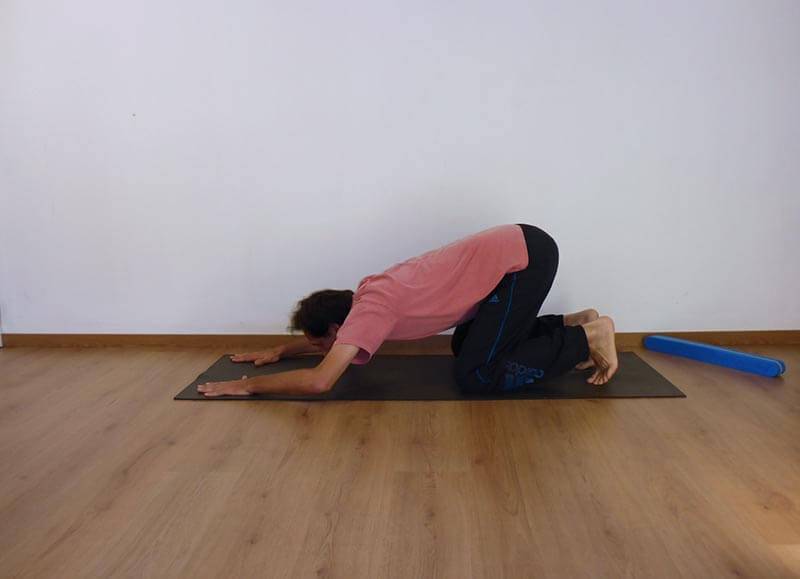
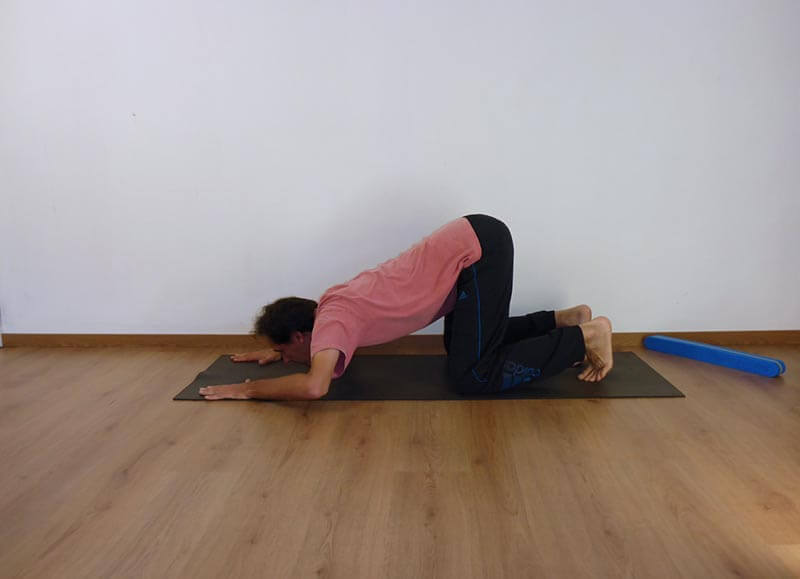
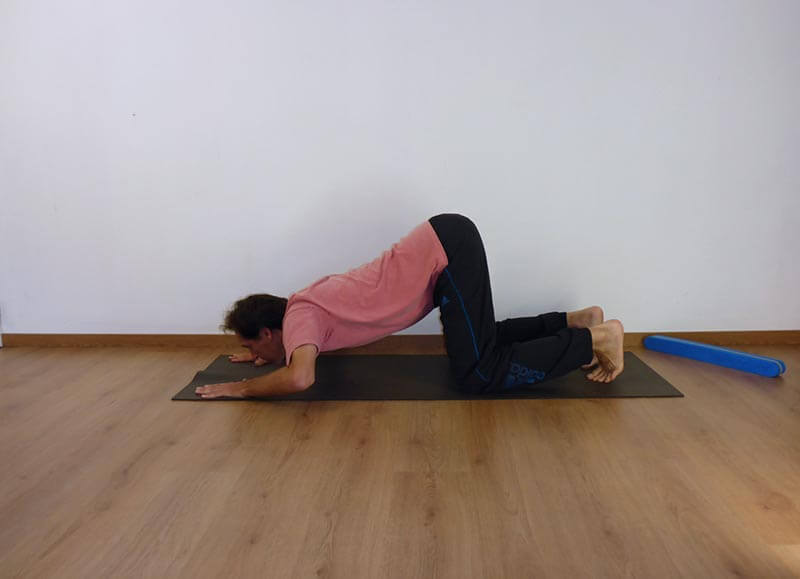
The Vacuum Cleaner
- From Child’s Pose, extend arms forward.
- Breathe in, glide forward, keeping your nose at constant distance from the mat.
- Breathe out, returning to start.
Tip. If your arms and shoulders get tired, move less far forward, or don’t come that close to the floor. It’s important to move forward and backward with your nose at the same distance from the floor.
Core (for Lower Back Protection)
Strong and mobile core muscles maintain the natural curve of the lower back during lifting, protecting intervertebral discs and facet joints.
Here are two great exercises to work this area.
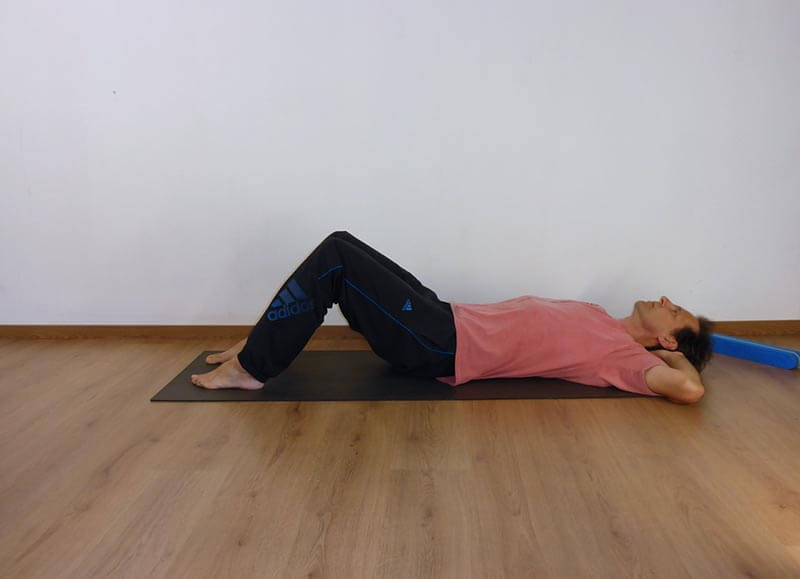
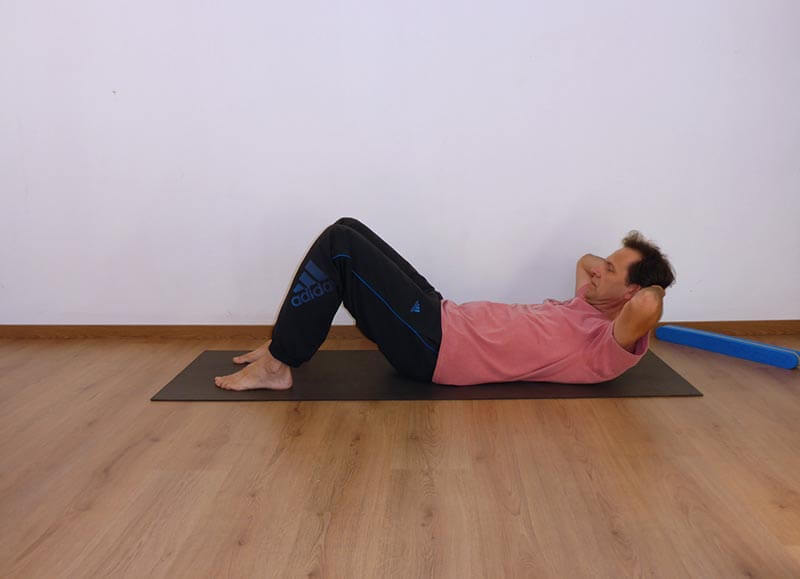
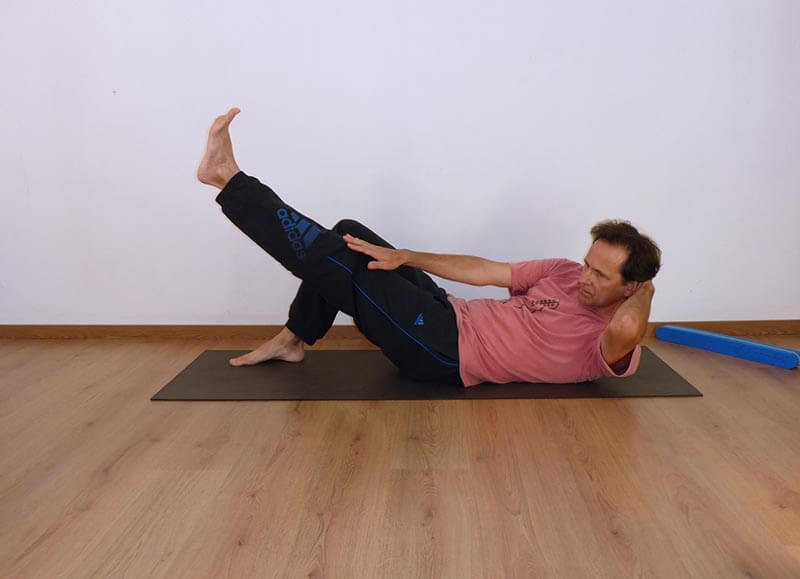
- Strengthening the Rectus Abdominis, the Obliques and the Transverse Abdominis
a. Supine, knees bent, support the head with your hands.
b. Lift head and shoulders from the floor by using the abdominals, not the arms. Breathe in.
c. Extend right leg, reach with left hand to right calf, left elbow moves towards the floor, breathe out.
d. Return to center, change support hand, breathe in.
e. Extend left leg, reach with right hand to left calf, right elbow moves towards the floor, breathe out.
f. Return to center, change support hand, breathe in.
Repeat 10 to 20 times.
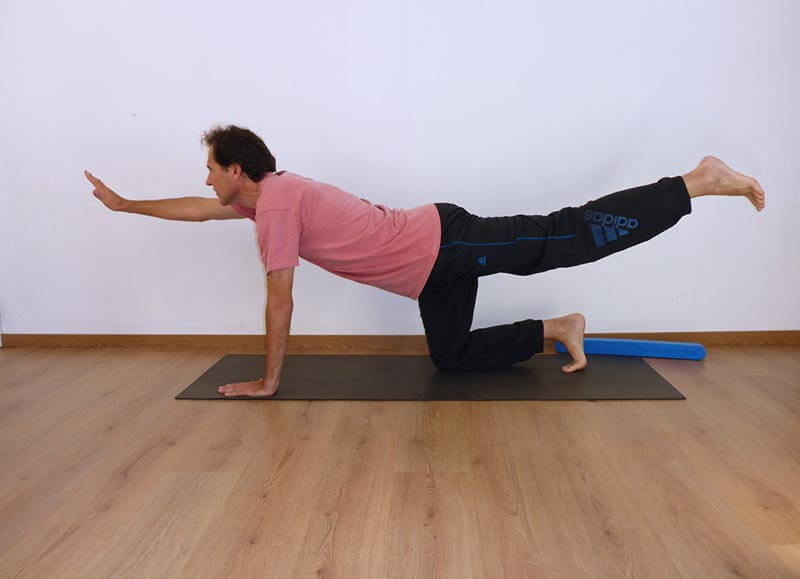
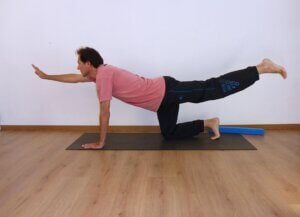
- The Flying Dragon – strength, balance, and mobility
a. Come on all fours, neck in alignment with the back.
b. Shift weight to the right knee and without any change in the position of hips and pelvis, stretch the left leg backwards.
c. Shift weight to the left hand and stretch the right arm forward. Look towards your right hand.
d. Hold the position for 3 full breaths.
e. Shift weight to the left knee and without any change in the position of hips and pelvis, stretch the right leg backwards.
f. Shift weight to the right hand and stretch the left arm forward. Look towards your left hand.
d. Hold the position for 3 full breaths.
Repeat 2 times.
Enjoy!
⇓ What do you think? Please share your opinion in the comment box below ⇓
Leave A Comment